Egypt's Pharaonic legacy meets Jordan's Nabataean rose-red city in the Middle East's most spectacular two-country journey. Pyramids, Nile temples, coral reef, then Petra by candlelight.
Your Journey Route
This fifteen-day circuit pairs the Pharaonic world with the Nabataean kingdom for the Middle East's most ambitious and rewarding tour. Egypt delivers the Giza Plateau, Memphis, Saqqara, a five-star Nile cruise through Aswan to Luxor, and two days of Red Sea snorkelling at Sharm El Sheikh. Jordan adds Petra, the rose-red rock city carved by the Nabataeans 2,000 years ago, and Wadi Rum, the vast desert that served as Lawrence of Arabia's battleground and more recently as the backdrop for The Martian. Two countries, two ancient civilisations, two kinds of desert, fourteen nights.
Your driver meets you at Cairo International Airport with a name board. Private air-conditioned transfer to your hotel in central Cairo. Welcome briefing with your guide, an orientation walk along the Nile corniche in the evening, and a good night's sleep before the journey begins.
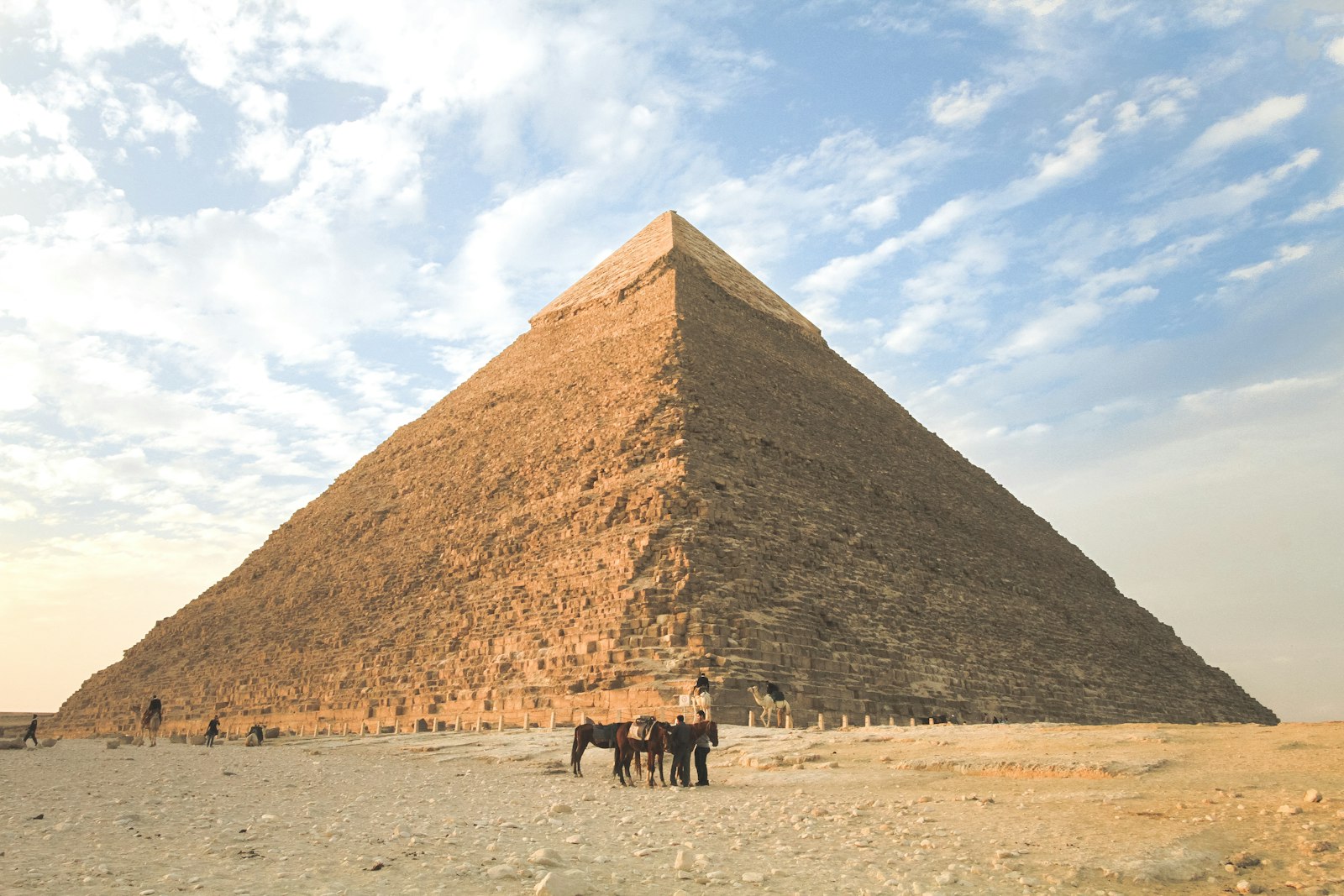
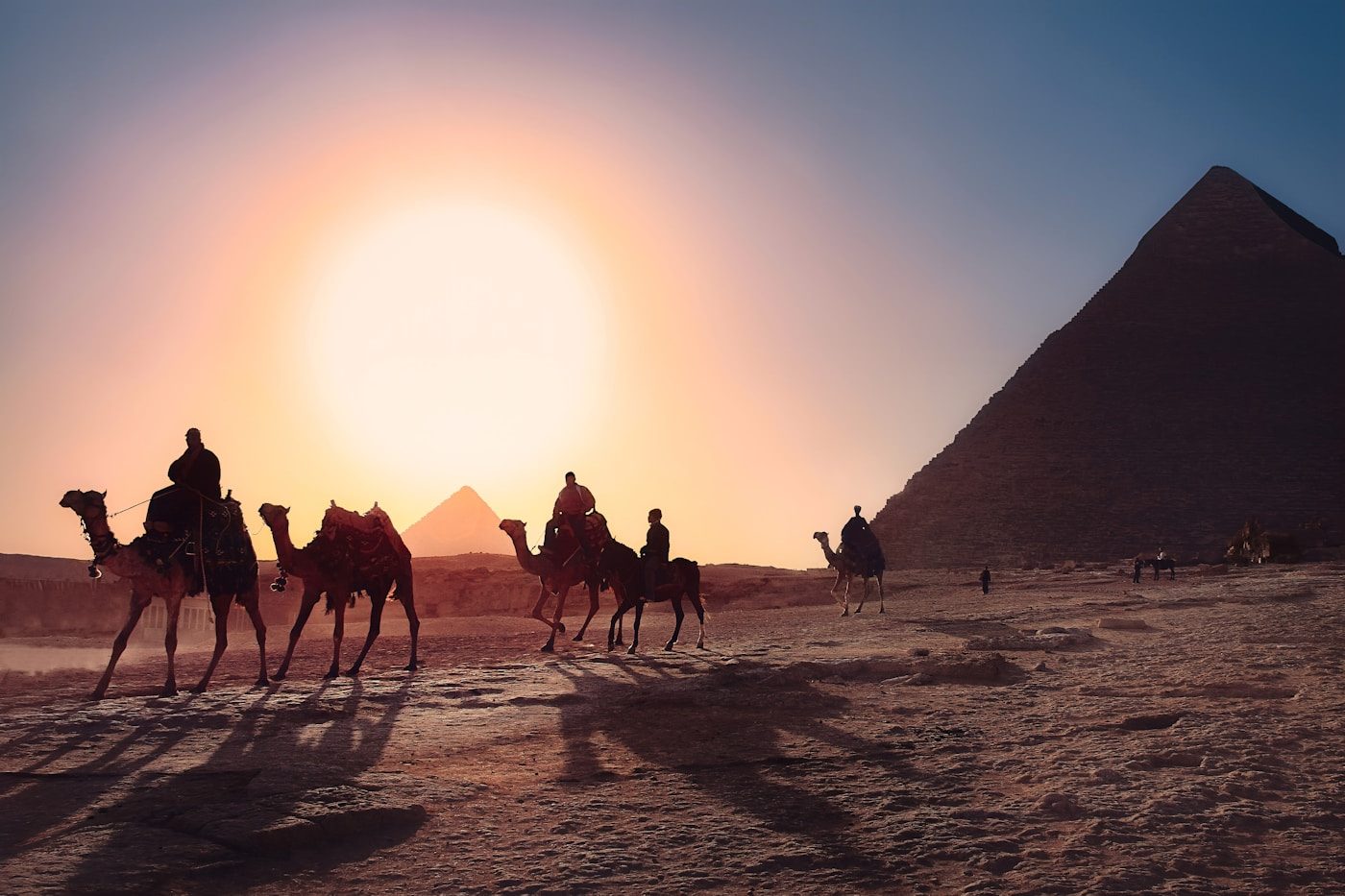
The Giza plateau at dawn is a different world from the midday crowds. Your Egyptologist guide brings the complex alive with the engineering, politics and ritual behind every stone. Afterward, the Grand Egyptian Museum holds Tutankhamun's complete burial treasure in a purpose-built space of extraordinary scale.
Cairo's depth is not just Pharaonic. The old city layers 2,000 years of Christian and Islamic heritage over Roman foundations. The Hanging Church is built over a Roman fortress tower. Khan el-Khalili has been a trading bazaar since the 14th century, and its narrow lanes are one of the great urban experiences on earth.
Saqqara predates Giza by 200 years: Djoser's Step Pyramid is the world's oldest monumental stone structure. Memphis was Egypt's capital for a thousand years. The Egyptian Museum on Tahrir Square houses Tutankhamun's golden mask in the room where it has sat since Howard Carter shipped it from Luxor a century ago.
An early domestic flight south to Aswan, Egypt's most serene Nile city. Your guide meets you at the airport and takes you to Philae Island, where the Temple of Isis sits on a Nile island accessible only by motorboat. Then board your five-star Nile cruise ship for a welcome dinner as the ship moors in Aswan.
Abu Simbel by pre-dawn road convoy (3 hours each way) or chartered microplane (45 minutes, a significant upgrade). Four colossal statues of Ramesses II guard the mountain-cut temple, its interior painted halls remarkably vivid after 3,000 years. Return to Aswan for the Unfinished Obelisk and a sunset felucca sail around Elephantine Island.
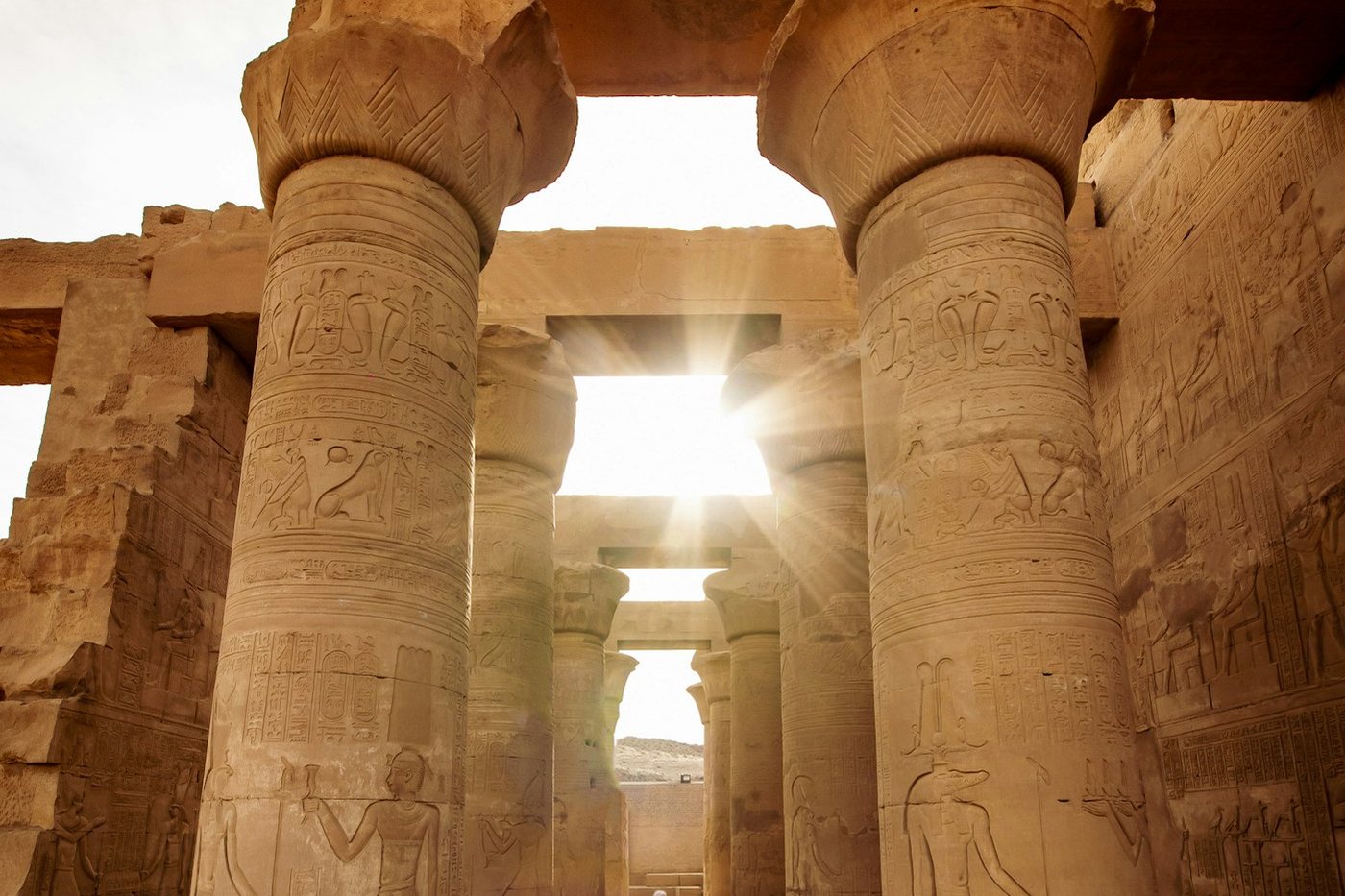
The ship sails north from Aswan through a landscape of golden cliffs and date palms, mooring at Kom Ombo for the afternoon visit. The dual temple of Sobek and Horus sits directly on the Nile bank; its crocodile museum houses mummified crocodiles that are among the most unusual artefacts in Upper Egypt.
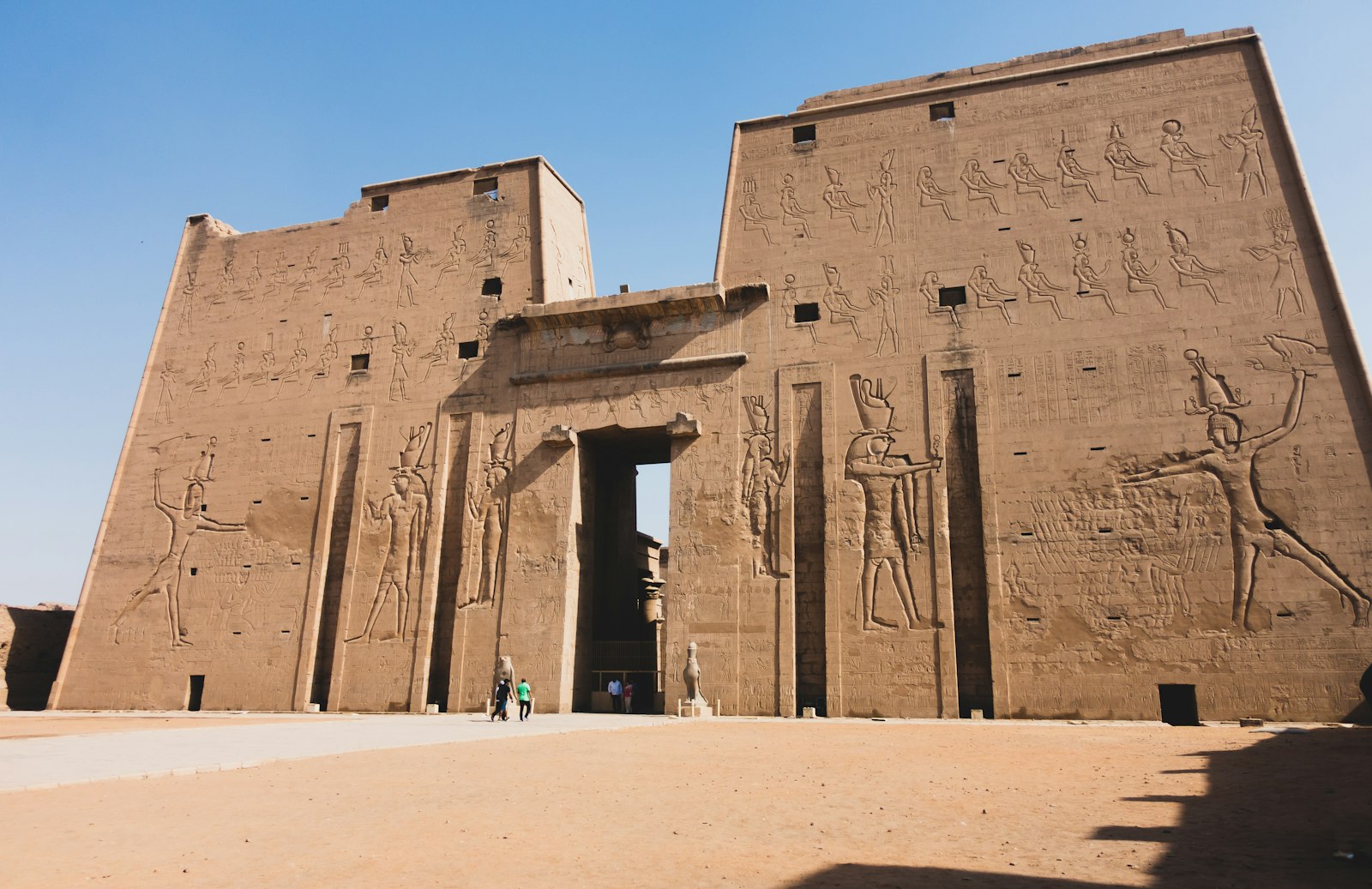
The Temple of Horus at Edfu is the most completely preserved ancient Egyptian temple in existence. Its towering granite falcons at the entrance and its interior rooms, still with original painted ceilings, give a better picture of what an active ancient temple looked like than almost anywhere else. Horse-drawn carriages transfer you from the ship to the temple gates.
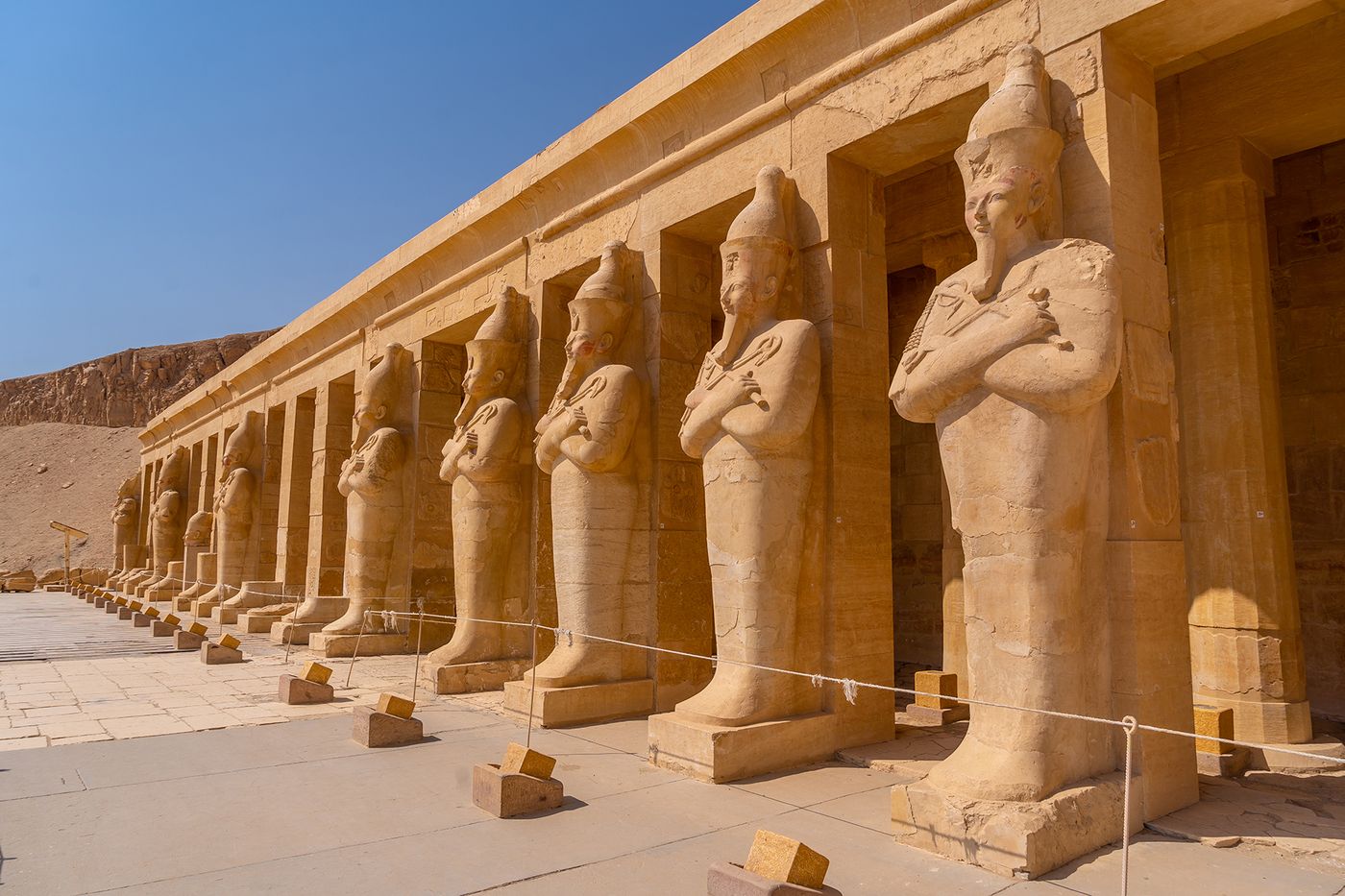
The West Bank of Luxor is the ancient world's greatest necropolis. The Valley of the Kings holds sixty-three royal tombs cut into the limestone cliffs; the wall paintings inside remain strikingly vivid after 3,200 years. Hatshepsut's mortuary temple at Deir el-Bahari is architecturally unlike anything else in Egypt, cut directly into the cliff face.
Karnak is the world's largest ancient religious complex, a 2-kilometre-long sequence of temples, obelisks and hypostyle halls built over 2,000 years of successive pharaohs. The great hypostyle hall, with its 134 columns, is one of the most overwhelming spaces ever created by human hands. Luxor Temple at sunset, then an evening flight to Sharm El Sheikh.
Ras Mohammed National Park at the southern tip of Sinai has some of the finest coral reef in the world. A full-day guided boat trip to Shark Bay and Yolanda Reef (a shipwreck whose cargo of bathroom tiles sits in the coral at snorkelling depth). Equipment is provided. The marine life here is extraordinary.
A free morning at Naama Bay before the afternoon transfer to the Taba border crossing (2.5 hours). The crossing to Jordan at Aqaba takes approximately 1.5 hours including passport control and customs on both sides. Your Jordan guide meets you on the Jordanian side and drives you to your Petra hotel (3 hours).
A full day in one of the ancient world's most extraordinary places. The Siq is a 1.5-kilometre narrows carved by water and time, ending in the sudden reveal of the Treasury's rose-red facade. Beyond lies an entire city carved into cliff: royal tombs, a Roman colonnaded street, a temple, a monastery. Petra rewards a full day without compromise.
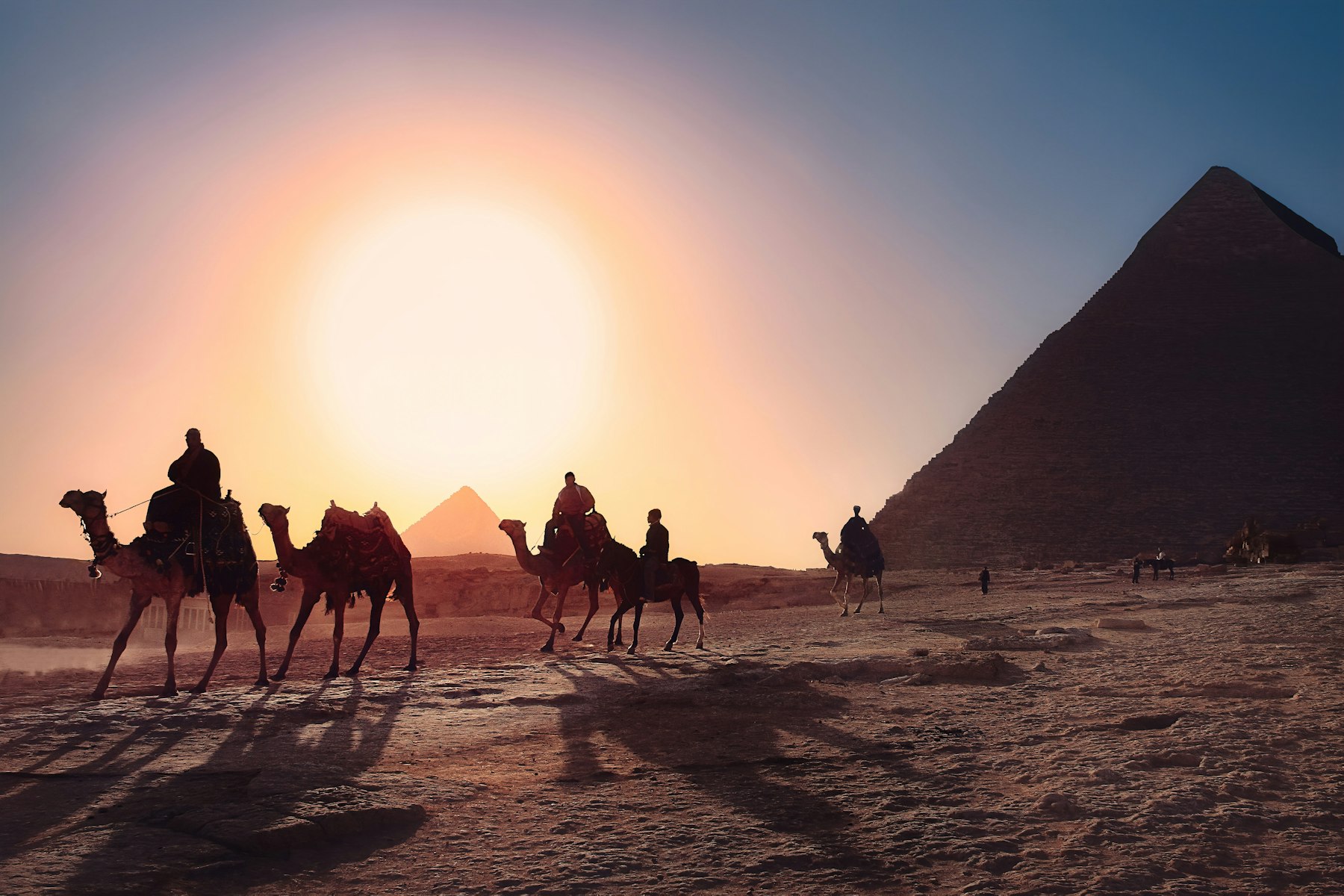
Drive from Petra to Wadi Rum (1.5 hours) and enter one of the world's great desert landscapes. The afternoon jeep safari threads through sandstone and granite formations past natural arches, Lawrence of Arabia film locations and ancient Nabataean rock inscriptions. A camel ride at sunset leads to dinner at a Bedouin camp under an extraordinary desert sky.
A final morning in the Wadi Rum desert before transferring to Aqaba or Queen Alia International Airport in Amman for your international departure. Your Jordan guide handles all logistics and sees you to the airport. The drive to Amman takes approximately 3.5 hours; Aqaba is 45 minutes.


Sunrise over the Valley of the Kings from a hot air balloon. Temples, the Nile and the Eastern Desert spread below in the early light. The iconic Egypt photograph.
1,800 candles line the Siq to the Treasury on Monday, Wednesday and Thursday evenings. Visitors walk through the canyon in silence. An extraordinary experience.
Float in the Dead Sea, one hour south of Amman, before your international departure. The lowest point on earth and one of its most unusual swimming experiences.
Cross from Amman to Jerusalem for a 2–3 night Holy Land addition. The Old City, the Church of the Holy Sepulchre, the Western Wall and the Mount of Olives.
Upgrade the Abu Simbel excursion from road convoy (3 hours each way) to a private chartered microplane (45 minutes each way). Arrive at sunrise before the coaches.
A private sunset felucca sail around Elephantine Island in Aswan. The pink granite rocks, the Aga Khan Mausoleum and the golden cliffs at dusk are unmissable.
Yes. Egypt tourist visa is available on arrival at Cairo airport (US$25) or as an e-visa online. Jordan visa is available on arrival at the Taba-Aqaba border crossing or at Aqaba airport. Both are straightforward and our team provides detailed guidance before travel.
By land via the Taba border crossing (Egypt side) to Aqaba (Jordan side). The crossing takes approximately 1.5–2 hours including passport control and customs on both sides. Our drivers handle all logistics; you simply present your passport.
Absolutely. Ramesses II's four 20-metre statues cut into the mountain are one of the most extraordinary sights on earth. The interior is remarkably preserved with original painted reliefs. We strongly recommend adding the Abu Simbel excursion or upgrading to the chartered aircraft option.
On Monday, Wednesday and Thursday evenings, the Siq and the Treasury are lit by 1,800 candles. Visitors walk through the canyon in silence to reach the Treasury, then sit for traditional music. It is an extraordinary experience but requires overnight in Petra to attend. Your Day 13 hotel in Petra makes this accessible.
Wadi Rum is a vast sandstone and granite desert valley in southern Jordan. Lawrence of Arabia operated here in 1917 and its landscape (vast red rock formations, sand dunes) is immediately recognisable from dozens of films. The Bedouin camp provides a full desert experience, dinner under stars and a genuinely dark sky.
Yes, with age-appropriate expectations. Jordan is very family-friendly. In Egypt, the Nile cruise is particularly good for children. The Petra monastery hike (800 steps) is optional, not compulsory. Children aged 8+ typically love both countries. For younger children, we can adjust the itinerary.
October through April. Both Egypt and Jordan are best visited in the cooler months. Jordan's Petra can be very hot in July and August. Wadi Rum is cold at night in December–January but comfortable at midday.
Yes. The Jordan itinerary can be extended to include the Dead Sea, Jerash (Roman city), or Jerusalem and Bethlehem. Contact us with your requirements for a custom combined quote.
Two ancient civilisations. One seamless journey. The Middle East's greatest double act.
Petra by candlelight. The Nile at sunset. Bedouin camp under stars. Deeply romantic.
Pharaonic Egypt and Nabataean Jordan: 5,000 years of extraordinary human achievement.
Reef snorkelling, Wadi Rum jeep safari, desert camp, Red Sea and sand dunes.
Every journey we build is private, guided and crafted around you. Tell us your travel dates and group size and we'll send you a personalised itinerary within 24 hours.